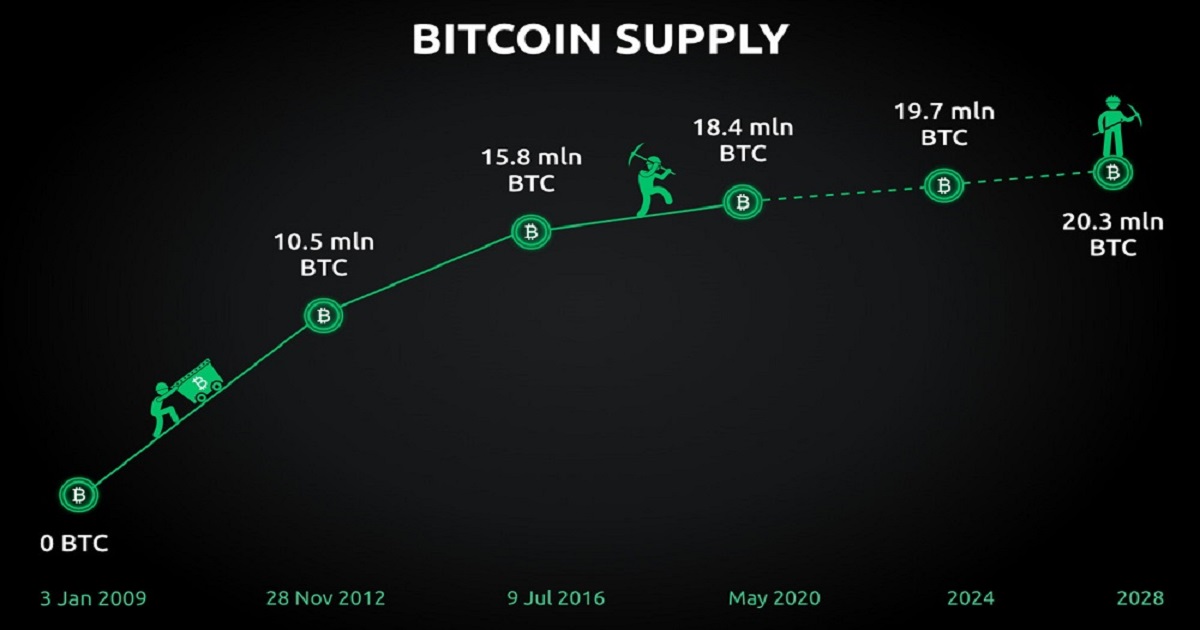
In this article, you will learn when will the last Bitcoin be mined. As of March 2023, the total number of bitcoins in circulation is approximately 18.8 million. The maximum supply of Bitcoin is limited to 21 million, which means that there are only about 2.2 million bitcoins left to be mined.
When will the Last Bitcoin be Mined?
The total supply of Bitcoin is limited to 21 million coins, and the process of mining new bitcoins is designed to become progressively more difficult over time. As of March 2023. more than 18.8 million bitcoins have already been mined, leaving less than 2.2 million left to be mined.
Based on the current rate of mining, it is estimated that the last bitcoin will be mined around the year 2140. However, it's important to note that this estimate is subject to change based on various factors such as changes in mining difficulty, the rate of Adoption of Bitcoin, and technological advancements that could affect the mining process.
What is the Supply Dynamics of Bitcoin?
The supply dynamics of Bitcoin are unique compared to traditional currencies, as it has a limited supply and a predetermined issuance schedule. Here are some of the key aspects of Bitcoin's supply dynamics:
Limited supply: The total supply of Bitcoin is limited to 21 million coins. This means that no more than 21 million bitcoins will ever exist, which makes Bitcoin a deflationary currency.
Mining rewards: Bitcoins are created through a process called mining, where miners compete to solve complex mathematical problems in exchange for newly minted bitcoins. The mining reward is currently 6.25 bitcoins per block, but this reward is programmed to haltve every 210,000. every four years. This means that the rate of new Bitcoin issuance decreases over time.
Halving events: The halving events that occur every four years are significant events that affect the Bitcoin supply dynamics. When the mining reward is halved, it reduces the rate of new Bitcoin issuance, which makes Bitcoin a scarcer asset. This can lead to an increase in demand and price.
Lost coins: It's estimated that a significant number of bitcoins have been lost over the years due to lost private keys or forgotten passwords. This means that the actual supply of bitcoins is lower than the total supply, making it even scarcer.
Overall, the limited supply and predetermined issuance schedule of Bitcoin make it a unique asset with a predictable supply curve. This has contributed to its growing popularity as a store of value and a potential hedge against inflation.
Bottom Line
When there's no Bitcoin left to mine, there's also the chance that transaction fees would increase sharply to account for the fact that there's no more block rewards. However, a lot of things could change between now and 2140 and there's no guarantee that the Bitcoin network will survive for more than a century. This article is about when will the last Bitcoin be mined.