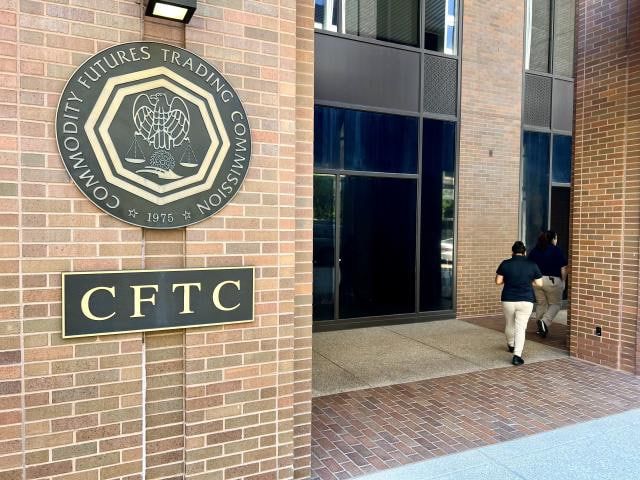
US Commodity Futures Trading Commission (CFTC) Commissioner Christy Goldsmith Romero has proposed reducing the anonymity of cryptocurrencies as a means of managing risks associated with digital assets. The statement was made during a keynote address on illicit finance and o the key risks of digital finance at City Week 2023 in London on April 25.
Romero emphasized that governments and industry need to address the main feature that makes cryptocurrencies attractive to illicit finance — anonymity. In his speech, Romero said that the risks associated with digital assets must be managed because market integrity, national security and financial stability are of paramount importance and cannot be compromised.
Reducing the risk of illicit finance in the cryptocurrency market requires addressing the challenge of identity verification, Romero said. She added that while public blockchains offer some transparency and traceability, the use of mixers and anonymity-enhancing technologies adds potent ially significant risks. In her words : “It is possible for all cryptocurrency companies to distance themselves from mixers and anonymity-enhancing technologies while still appropriately providing financial privacy to customers.”
A crypto mixer is a service that mixes many users' cryptocurrencies to obfuscate the source and owner of the funds. Because Bitcoin, Ethereum, and most other public blockchains are transparent, it is difficult to achieve this level of privacy. Talking about the need for authentication, Romero highlighted that two blenders, Blender and Tornado Cash, were recently sanctioned by the US Department of the Treasury. According to her, Tornado Cash is allegedly involved in laundering $7 billion, including millions stolen by the Lazarus Group, a North Korean st ate -backed hacking group involved in cyberattacks to aid illicit nuclear and ballistic missile programs.
Romero said crypto firms can maintain financial privacy for customers without relying on mixers and anonymity-enhancing technologies. She went on to point out that there is a difference between financial privacy and anonymity. Traditional Finance (TradFi) ensures financial privacy by verifying customer identities through Know Your Customer (KYC), Anti-Money Laundering (AML) and Combating the Financing of Terrorism (CFT) measures without relying on anonymity enhancing technologies. Romero encouraged verification of digital identities, urging exchanges as well as decentralized finance (De Fi) platforms to verify users' digital identities. She pointed out that DeFi services are often not fully decentralized, but are maintained by a central party that can verify identities and may be held accountable for this.
According to the commissioner, technologies exist to provide digital identity, and more are being developed. Congress is also considering new laws to address anonymity and digital identity. The U.S. government will continue to prioritize preventing cryptocurrencies from being used for illicit financing.