
$ 0.00008995(0.00%)
AION Price Chart
Aion Market Information
$ 11.3100
0.00%
0.00%
0.00%
1715
365,803,224.01
$ 51,040.41
567,431,008.00
Information
Issue Date2017-10-19
Initial Offering Price$ 0.8750
Max Supply
0.00
Circulating Supply567,431,008.00
Listed Exchanges0
Incentive Mechanism
Encryption Algorithm--
Aion Price History
| Time | Change | High | Low |
|---|---|---|---|
| 24H | 0.00% | -- | -- |
| 7D | 0.00% | -- | -- |
| 30D | 0.00% | -- | -- |
| All | 0.00% | -- | -- |
About Aion
1. Introduction
Aion is a cross-chain basic protocol that links different blockchains, with features such as scalability, customizability, and multi-level. The protocol provides a high-performance bridge mechanism for inter-chain communication. The lightweight BFT consensus algorithm is used to verify, sign and propagate transactions across the network and distribute things. Different chains are linked through multiple bridges to realize data and value. of delivery, each bridge can be considered its own product, its fee structure and functionality can be tailored to market needs or market segments, each network offers its own unique features such as low fee structure and high throughput, and Others provide transaction obfuscation features. At the same time, the bridges use incentive measures to ensure the effectiveness of inter-chain communication. In the case of insufficient or unreliable incentives, cross-chain verification technology is used to ensure the reliability and security of inter-chain information transmission.
2. Project introduction
After identifying the significant shortcomings of existing blockchain solutions, nuco focused on building a set of solutions that provide more extensive coverage for mainstream blockchain applications and diverse solutions. In our opinion, different industries will have different blockchains to provide solutions within the industry. Therefore, the Aion network is designed to support the integrity of synergy, scalability on and between chains, and individual customization of blockchains. In this design, Aion-1 will act as a general blockchain, incentivizing and guaranteeing the overall operation of the network through an internal economic model.
The AION project is highly innovative. Whether it is the idea of "multi-layer blockchain network" or the design of AION's high-performance virtual machine and consensus mechanism, it is highly original. The basic functions of AION as a main chain have been basically realized, the project progress is normal, the overall code quality is high, the developers have high technical ability and successful experience in the blockchain field, the code update is fast and the development enthusiasm is high.
Interoperability:
The need for inter-chain operations covers countless use cases. Cross-organizational applications such as supply chain collaboration, between medical services and government agencies, and multiple internal chains within an enterprise.
The Aion protocol defines a high-performance bridge mechanism for inter-chain communication: allowing multiple bridges between chains to transfer data and value. The bridge mechanism relies on incentives to ensure the effectiveness of interchain exchanges.
In the case of insufficient or unreliable incentives, Aion uses cross-chain verification technology to ensure the reliability and security of information transfer between chains. The core of this solution design is the world's first public enterprise blockchain: Aion-1.
Aion-1, a trustless software execution platform with a strong cryptoeconomic model, has the following features:
Allows the creation of unlimited Spokes: custom blockchains, and can be integrated with All other blockchain connections in the Aion network allow users to customize governance, issuance and participation methods;
Provide an inter-chain communication mechanism for data and value transfer in all Spokes in the Aion network;
< p>Connect to the main Ethereum blockchain, allowing the seamless transfer of AION tokens between Aion-1 and the Ethereum platform.Scalability and effectiveness:
The current blockchain has the problem of slow transaction processing, and commercial and government applications usually require high transaction processing speed. Most blockchain systems are not designed enough to support applications that require large amounts of data. Therefore, the Aion network will solve this problem by introducing a new high-performance virtual machine (Aion Virtual Machine, AVM) and a scalable database.
Customizability:
Many enterprises have a high demand for blockchain management to control access rights for security, privacy or business/partner reasons. Even in a single large-scale enterprise, the application scope of blockchain is wide enough to require a multi-blockchain coexistence solution, that is, each blockchain has different semantics, operations or governance attributes, and at the same time, it can meet the security transfer of information between chains .
In addition, the mining chain is too dependent on entities (miners) outside the control of the enterprise, which can cause problems for the enterprise. ION aims to solve the following challenges: allow custom blockchain designs (including different consensus algorithms and virtual machines) without sacrificing synergy; create a consensus mechanism Aion based on artificial intelligence algorithms and representing rights and interests As a multi-layer blockchain network, the network aims to provide a network environment where multiple blockchains work together to solve the unique problems of the industry and provide power for modern services. Aion will become a common protocol for these blockchains to build more efficient and decentralized systems.
The elements of the AION multi-layer blockchain network are as follows:
Routing:
As described above, the AION multi-layer blockchain network area The communication between blockchain networks is through "bridge" + "connection network". Communication of information is a multi-stage process. At each stage, witnesses validate a transaction and come to a consensus on whether to continue forwarding the transaction or reject it.
Brige:
Bridge is the communication protocol between the blockchain network and the connecting network in the AION system. The bridge itself is also composed of its own witness network, and the witnesses reach consensus through the lightweight BFT algorithm. The bridge has two main responsibilities: signing and forwarding cross-chain transactions that have been included in the original blockchain and paying cross-chain communication fees; notifying the connected network to participate in the network's merkle hash value update.
Aion News

Bitcoin Tops $81K, NEAR Jumps 23% Amid ZEC Swap Traffic
Bitcoin climbed past $81,000 during Monday's Asian trading session, while NEAR surged 23% on a wave of swap activity tied to Zcash.
Wayne Ingram |

Ethereum Lets Users Pay Gas Fees Without Holding ETH
Ethereum core developers scheduled EIP-8141, called "Frame Transactions," for inclusion in the Hegotá upgrade planned for 2027.
James Dean |
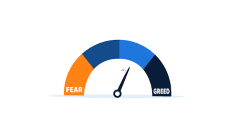
Crypto Fear & Greed Index Hits 74: Rally Sparks Correction Fears
The Crypto Fear & Greed Index jumped from 27 on August 12, 2026 to 74 on August 26, 2026, a 47-point swing in two weeks.
Christopher Smith |
Learn
What is AION Crypto? How Does It Work?
AION is a multi-tier blockchain platform that aims to solve the interoperability and scalability issues that plague many existing blockchains. Let's take a closer look at this article for a better understanding.
Hallie Gill |
What is AION Crypto? Why Should You Care?
AION is a multi-tier blockchain platform that aims to solve the interoperability and scalability issues that plague many existing blockchains. Let's take a closer look at this article for a better understanding.
Sherry Cantwell |

What is the Descending Triangle Pattern? What is the Ascending Triangle Pattern?
Ascending and descending triangles are the two most common right-angle chart patterns. Learn how to draw them correctly, confirm breakouts instead of guessing, project targets with the measured move, and control risk when the pattern fails.
James Dean |