
$ 0.0168(0.00%)
CHR Price Chart
Chromia Market Information
$ 1.4900
0.00%
0.00%
0.00%
603
812,341,951.44
$ 16,386,924.49
974,831,915.37
Information
Issue Date
Initial Offering Price--
Max Supply
978,064,789.00
Circulating Supply974,831,915.37
Listed Exchanges13
Incentive Mechanism
Encryption Algorithm--
Chromia Price History
| Time | Change | High | Low |
|---|---|---|---|
| 24H | 0.00% | -- | -- |
| 7D | 0.00% | -- | -- |
| 30D | 0.00% | -- | -- |
| All | 0.00% | -- | -- |
About Chromia
CHR-Claudia (designed by Symphony Avenue) is a new blockchain platform for decentralized applications. It was designed to address the shortcomings of existing platforms and to enable a new generation of programs (dapps) to expand beyond what is currently possible. Claudia is both a blockchain and a relational database. This means that decentralized applications (dapps) can be written in a way that is familiar to developers all over the world, whether they are large enterprise applications, games or small projects.
The Symphony Coin is Claudia's native token. It is a medium of exchange and an economic balancing tool for dapps deployed on Claudia. It:
- Enables dapps to pay for system resource usage
- Enables resource conversion between dapps
- Enables smart contract automatic conversion
- Liquidity and profit sharing
- Provides a mechanism for validator nodes to deposit funds for participation in the public network
Chromia News

Solana Mainnet Launches Alpenglow to Cut Finality Time
Solana switched on its Alpenglow upgrade on October 21, 2026, replacing the way its validators agree that a transaction is final. Validators are the computers that run the network, and finality is the point where a transaction can no longer be reversed.
James Dean |

Switzerland Unlocks Retail Access to a Direct Bitcoin ETF
Switzerland's Financial Market Supervisory Authority (FINMA) approved the country's first retail exchange-traded fund that invests directly in bitcoin on October 20, 2026.
Martha Grizzard |

Stablecoin Payments Jump 45% to $482 Billion Despite Flat Supply
Stablecoin payments reached $482 billion from January through September 2026, up 45% from the same period in 2025.
Sherry Cantwell |
Learn

What Is Chromia Mainnet? What Benefits Does It Offer?
Chromia's mainnet is a relational blockchain platform designed to merge the efficiency of relational databases with the security and decentralization typical of blockchain technology.
Martha Grizzard |
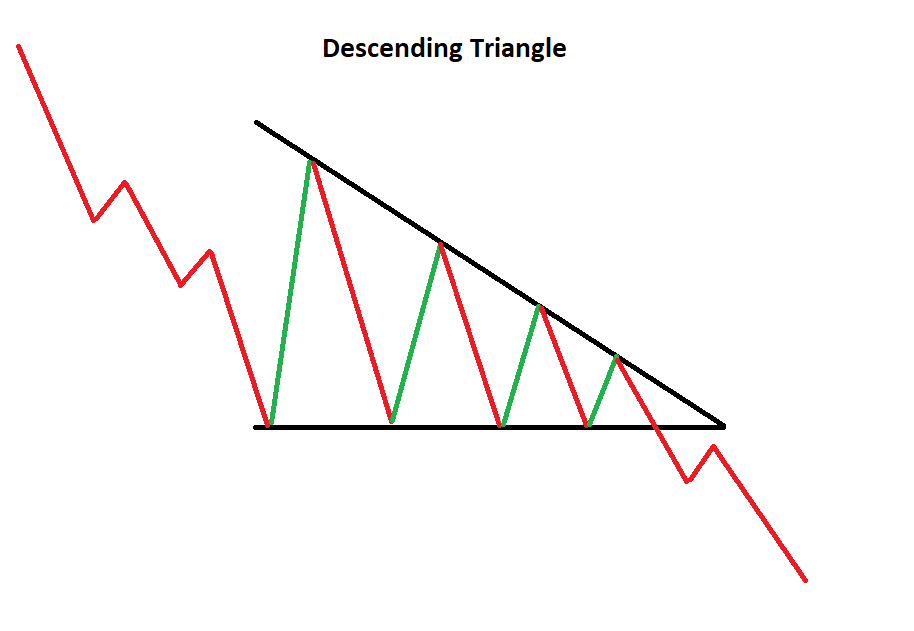
What is the Descending Triangle Pattern? What is the Ascending Triangle Pattern?
Ascending and descending triangles are the two most common right-angle chart patterns. Learn how to draw them correctly, confirm breakouts instead of guessing, project targets with the measured move, and control risk when the pattern fails.
James Dean |

What is Bitcoin Pizza Day? Who is Bitcoin Pizza Guy?
Bitcoin Pizza Day marks the first documented purchase of a physical item with bitcoin. Learn what happened on May 22, 2010, how much 10,000 BTC was worth then and later, and who the Bitcoin Pizza Guy really is.
Craig Green |
Frequently Asked Questions
What Is The Current Price of Chromia?
Can I Buy Chromia on BitKan?
How Can I Stay Updated on Chromia's Latest Price and News?
Why Does The Price of Chromia Go UP and Down?
How Do I Store Chromia?