
$ 0.000779(0.00%)
CTXC Price Chart
Cortex Market Information
$ 2.3900
0.00%
0.00%
0.00%
1538
59,950,235.99
$ 185,776.88
238,273,252.60
Information
Issue Date2018-04-17
Initial Offering Price$ 0.5800
Max Supply
0.00
Circulating Supply238,273,252.60
Listed Exchanges1
Incentive MechanismPoW
Encryption Algorithm--
Cortex Price History
| Time | Change | High | Low |
|---|---|---|---|
| 24H | 0.00% | -- | -- |
| 7D | 0.00% | -- | -- |
| 30D | 0.00% | -- | -- |
| All | 0.00% | -- | -- |
About Cortex
Project Overview
Cortex's goal is to create a truly decentralized artificial intelligence autonomous system, providing the most advanced machine learning models on the blockchain, users can use the intelligence on the cortex blockchain contract to infer the model. One of cortex's goals also includes implementing a machine learning platform that allows users to post tasks and submit AI dapps on the platform.
Project Highlights
Cortex proposed AI DApps, the concept of artificial intelligence distributed applications. The introduction of artificial intelligence into smart contracts makes the following applications possible:
1. Information services: personalized recommendation systems, search engines, news writing services.
2. Finance: credit, intelligent investment consulting.
3. AI assistant: automatic question and answer, industry knowledge map, speech synthesis, face attribute prediction.
4. Simulation environment: autonomous driving, Go and other reinforcement learning applications.
The cerebral cortex allows users to write machine learning programs on the blockchain and submit some interactions that depend on other contracts. This is Cortex's originality, but it is not clearly stated in the white paper whether the other contracts it refers to are smart contracts on ETH or smart contracts on different chains. If it is the latter, it is more difficult to achieve, and the current cross-chain of smart contracts is far from this level.
Architecture:
Data Layer: Cortex's blockchain does not store models and data, but stores hash values of models and data. Key-value storage systems are unchained. When enough copies have propagated across the network, the Cortex blockchain can acquire new models and new data.
Network layer: Cortex will add an inference instruction to smart contracts, which makes it possible for smart contracts to support the use of the Cortex blockchain model during interactions.
Consensus layer: PoW is used to further close the gap between CPU and GPU speedup.
Incentive layer: Cortex proposes an incentive mechanism for collective collaboration, allowing anyone to submit and optimize models in Cortex, and model contributors can be rewarded.
Contract Layer: Cortex will add an inference instruction to smart contracts, which makes it possible to support the use of the Cortex blockchain model in smart contracts.
Application Layer, Platform Layer: Cortex's goals also include implementing a machine learning platform that allows users to post tasks on the platform, submit models, infer by calling smart contracts, and create their own AI DApps ( Artificial Intelligence Decentralized Applications).
Application scenarios
Information services, financial services, artificial intelligence assistants, simulation environments, etc.
Cortex News

Bitcoin Tops $81K, NEAR Jumps 23% Amid ZEC Swap Traffic
Bitcoin climbed past $81,000 during Monday's Asian trading session, while NEAR surged 23% on a wave of swap activity tied to Zcash.
Wayne Ingram |

Ethereum Lets Users Pay Gas Fees Without Holding ETH
Ethereum core developers scheduled EIP-8141, called "Frame Transactions," for inclusion in the Hegotá upgrade planned for 2027.
James Dean |
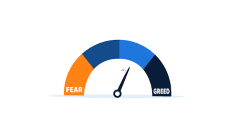
Crypto Fear & Greed Index Hits 74: Rally Sparks Correction Fears
The Crypto Fear & Greed Index jumped from 27 on August 12, 2026 to 74 on August 26, 2026, a 47-point swing in two weeks.
Christopher Smith |
Learn

What is the Descending Triangle Pattern? What is the Ascending Triangle Pattern?
Ascending and descending triangles are the two most common right-angle chart patterns. Learn how to draw them correctly, confirm breakouts instead of guessing, project targets with the measured move, and control risk when the pattern fails.
James Dean |

What is Bitcoin Pizza Day? Who is Bitcoin Pizza Guy?
Bitcoin Pizza Day marks the first documented purchase of a physical item with bitcoin. Learn what happened on May 22, 2010, how much 10,000 BTC was worth then and later, and who the Bitcoin Pizza Guy really is.
Craig Green |

What is Polymarket? Can It Predict the Future of Crypto?
Polymarket is a decentralized prediction market on Polygon where users trade Yes/No shares on real-world events. Here is how it works, how accurate its prices are, its crypto limits, and its legal status.
Barry Stidham |