
$ 0.0105(0.00%)
CURE Price Chart
Curecoin Market Information
$ 1.2900
0.00%
0.00%
0.00%
2491
99.9572
$ 329,681.54
31,354,942.32
Information
Issue Date-
Initial Offering Price$ 0.7985
Max Supply
0.00
Circulating Supply31,354,942.32
Listed Exchanges0
Incentive MechanismPoW
Encryption AlgorithmSHA256
Curecoin Price History
| Time | Change | High | Low |
|---|---|---|---|
| 24H | 0.00% | -- | -- |
| 7D | 0.00% | -- | -- |
| 30D | 0.00% | -- | -- |
| All | 0.00% | -- | -- |
About Curecoin
Project Overview
Curecoin was released in May 2013. Through the Folding@Home project, it combines the SHA256 proof-of-work algorithm with the study of protein fold structures. The study of protein folds requires the simulation of the biochemical reactions of proteins for the discovery of new drugs to cure diseases, but this process requires a lot of computing resources.
Project Highlights
urecoin describes itself as a cryptocurrency utility token working to replace ASIC mining with protein folding computations – helping scientists find new medicines instead of mining hashes . Curecoin's goal is to accelerate medicine related to cancer, Alzheimer's, antibiotics, diabetes, Huntington's, Ebola, Zika, HIV, Parkinson's, repurposing pharmaceutical compounds and astrobiology Research.
With version 2.0 released in December 2018, Curecoin claims to be 90% more efficient than ASIC mining. Registered protein folding participants continue to receive distribution from Cryptobullionpools.com's "automated oracle", where the premise balance is cached in cold storage (visible on the block browser). The network has transitioned to pure Proof-of-Stake (with an average annual reward of about 10%), which helps secure Curecoin’s network.
Halving 2020
The Curecoin Folding Group, which encouraged research by team members of the Folding@Home project at Stanford University, has passed the first halving, essentially converting the daily token Rewards halved. This is Curecoin's 4th anniversary reward reduction and will happen every 4 years until 2106. The timeline is based on 100 years of original documents by Curecoin founder Maxwell Sanchez. Core team member Ivan Tuma Jr. said: "This is an extraordinary milestone that demonstrates the stability and longevity of the Curecoin blockchain as a reward system for citizen scientists."
Since Curecoin launched on May 10, 2014 Since its launch, the daily reward (i.e. distribution) has been 7488 tokens per day for folding proteins. Payouts are cut in half, so new payouts for protein folding are 3,744 tokens per day. The next half-life of Curecoin 1.x is scheduled for May 10, 2022. The Curecoin network also issues tokens as part of the proof-of-stake system and SHA-256 mining proof-of-work. The income of the protein folder is 4 times the amount of tokens miners get. View lifecycle and daily delivery schedules. The number of tokens issued to miners also recently halved for the first time. The action of halving daily payments every four years helps reduce the supply of the coin. This is an agreement initiated by Nakamoto moto, the anonymous creator of Bitcoin.
Curecoin News
Bitcoin Tops $81K, NEAR Jumps 23% Amid ZEC Swap Traffic
Bitcoin climbed past $81,000 during Monday's Asian trading session, while NEAR surged 23% on a wave of swap activity tied to Zcash.
Wayne Ingram |
Ethereum Lets Users Pay Gas Fees Without Holding ETH
Ethereum core developers scheduled EIP-8141, called "Frame Transactions," for inclusion in the Hegotá upgrade planned for 2027.
James Dean |
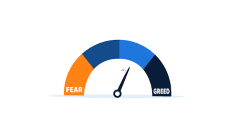
Crypto Fear & Greed Index Hits 74: Rally Sparks Correction Fears
The Crypto Fear & Greed Index jumped from 27 on August 12, 2026 to 74 on August 26, 2026, a 47-point swing in two weeks.
Christopher Smith |
Learn

What is the Descending Triangle Pattern? What is the Ascending Triangle Pattern?
Ascending and descending triangles are the two most common right-angle chart patterns. Learn how to draw them correctly, confirm breakouts instead of guessing, project targets with the measured move, and control risk when the pattern fails.
James Dean |

What is Bitcoin Pizza Day? Who is Bitcoin Pizza Guy?
Bitcoin Pizza Day marks the first documented purchase of a physical item with bitcoin. Learn what happened on May 22, 2010, how much 10,000 BTC was worth then and later, and who the Bitcoin Pizza Guy really is.
Craig Green |

What is Polymarket? Can It Predict the Future of Crypto?
Polymarket is a decentralized prediction market on Polygon where users trade Yes/No shares on real-world events. Here is how it works, how accurate its prices are, its crypto limits, and its legal status.
Barry Stidham |