
$ 0.000167(0.00%)
DFND Price Chart
dFund Market Information
$ 0.0615
0.00%
0.00%
0.00%
2948
53,223.97
$ 55,528.62
332,447,042.92
Information
Issue Date
Initial Offering Price--
Max Supply
0.00
Circulating Supply332,447,042.92
Listed Exchanges0
Incentive Mechanism
Encryption Algorithm--
dFund Price History
| Time | Change | High | Low |
|---|---|---|---|
| 24H | 0.00% | -- | -- |
| 7D | 0.00% | -- | -- |
| 30D | 0.00% | -- | -- |
| All | 0.00% | -- | -- |
About dFund
dFund is a project that aims to build an all-encompassing platform combining advanced DeFi smart-contract-powered features including decentralized hedge funds, direct p2p lending, credit scores, DAO governance and a secondary marketplace for synthetic assets into one easy to use platform.
Every user on the platform will be able to start their own decentralized hedge fund, or invest in one, and decentralized hedge funds on the platform will be ranked by their performance (roi), so people can make informed decisions. The founder of the decentralized hedge fund can only swap / trade with user funds, while withdrawals and payouts are automated by smart contracts, therefore eliminating the possibility of scam or pyramid schemes.
The platform will also enable users to participate in direct p2p lending, where every user sets the loan amount, interest rate, loan duration, and collateral requirement, which can be even under or over 100% allowing for under and over collateralized loans. Every borrower on the platform will have a credit rating, and lenders can set the minimum credit rating required to take the loan, and even set different collateral requirements and interest rates for users with different credit ratings. If someone never got liquidated on their loan aka never defaulted and always paid back the loan amount + interest on time, they will have a very high credit rating, while users who get liquidated / default many times will see their credit rating slip down. Credit rating can be improved or worsened over time.
The platform will also have a secondary marketplace for synthetic assets where users can buy and sell the loans, therefore allowing lenders to exit their positions and delegate the risk and waiting time to other users. So for example, if a user is lending a loan with a 10% interest rate, but they need money / liquidity urgently or they simply don’t want to wait until the end of the loan duration, they can instead decide to sell their loan, and maybe someone will buy it for 4% instantly, which would mean a 6% profit for them after they receive the original 10% interest at the end of the loan’s duration, which is beneficial for both a buyer and the seller. For the seller (the original lender), they don’t have to wait and they are getting a smaller profit with no risk, and for the buyer of the loan, they are receiving a higher profit for waiting until the end of the loan’s duration. This is in many ways similar to real life bond market.
dFund News

Bitcoin Tops $81K, NEAR Jumps 23% Amid ZEC Swap Traffic
Bitcoin climbed past $81,000 during Monday's Asian trading session, while NEAR surged 23% on a wave of swap activity tied to Zcash.
Wayne Ingram |

Ethereum Lets Users Pay Gas Fees Without Holding ETH
Ethereum core developers scheduled EIP-8141, called "Frame Transactions," for inclusion in the Hegotá upgrade planned for 2027.
James Dean |
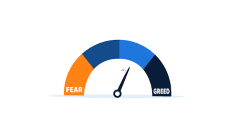
Crypto Fear & Greed Index Hits 74: Rally Sparks Correction Fears
The Crypto Fear & Greed Index jumped from 27 on August 12, 2026 to 74 on August 26, 2026, a 47-point swing in two weeks.
Christopher Smith |
Learn

What is the Descending Triangle Pattern? What is the Ascending Triangle Pattern?
Ascending and descending triangles are the two most common right-angle chart patterns. Learn how to draw them correctly, confirm breakouts instead of guessing, project targets with the measured move, and control risk when the pattern fails.
James Dean |

What is Bitcoin Pizza Day? Who is Bitcoin Pizza Guy?
Bitcoin Pizza Day marks the first documented purchase of a physical item with bitcoin. Learn what happened on May 22, 2010, how much 10,000 BTC was worth then and later, and who the Bitcoin Pizza Guy really is.
Craig Green |

What is Polymarket? Can It Predict the Future of Crypto?
Polymarket is a decentralized prediction market on Polygon where users trade Yes/No shares on real-world events. Here is how it works, how accurate its prices are, its crypto limits, and its legal status.
Barry Stidham |