
$ 0.000316(0.00%)
INT Price Chart
Intchain Market Information
--
0.00%
0.00%
0.00%
1081
346,991,506.91
$ 165,252.92
522,952,307.15
Information
Issue Date2017-09-22
Initial Offering Price$ 0.0424
Max Supply
960,304,191.96
Circulating Supply522,952,307.15
Listed Exchanges0
Incentive Mechanism
Encryption Algorithm--
Intchain Price History
| Time | Change | High | Low |
|---|---|---|---|
| 24H | 0.00% | -- | -- |
| 7D | 0.00% | -- | -- |
| 30D | 0.00% | -- | -- |
| All | 0.00% | -- | -- |
About Intchain
Project Overview
The INT project originated from a community practice of Apache Mynewt (Apache Open Source IoT Operating System). The team initially tried to define hardware through software to reduce the complexity of hardware development. However, even if the abstraction layer of the system is defined, how to form a unified ecology between hardware and hardware is still a challenging problem. Later, the team thought and considered to drive the integration between different systems through economic means.
INT is an IoT-oriented blockchain application platform and interaction standard based on an economy-driven approach. With the structure of parachain, the devices are connected to each other to form a distributed network, and the consensus algorithm is used to ensure the legality and trustworthiness of transactions between devices. At the same time, different types of devices can be connected to different parachains to avoid the explosive growth of the general ledger.
Project Highlights
The existence of INT can greatly reduce the development difficulty of IoT blockchain applications. It can relay different IoTs, form an edge computing network, effectively circulate resources, and accelerate the progress of IoT popularization. INT is designed as a scalable heterogeneous multi-chain, providing a relay chain platform on which a large number of verifiable, globally consistent, and consensus data structures can be built. In other words, on the basis of ensuring overall security and inter-chain trust, INT is committed to internalizing the IoT blockchain into an IoT infrastructure like TCP/IP, unknowingly affecting people's lives.
With the increase in the geometric progression of IoT devices and the improvement of machine intelligence, more and more automatically running IoT DAPPs will be installed on smart devices. Real-time and trusted automatic data exchange and automatic transactions will be carried out through distributed Internet of Things DAPP.
INT will realize the direct interconnection of data transmission between IoT nodes. The IoT solution does not need to introduce a large data center for data synchronization and management control, including data acquisition instruction sending and software update operations. Transmission through the network of the blockchain.
Application scenarios
(1) Smart manufacturing: such as product transportation, even if the goods are transferred through multiple logistics, the products can be tracked to ensure safety and timely delivery; such as production , inventory management, product sales and inventory data are recorded for easy sharing between business and production departments, strengthening just-in-time production and improving operational efficiency. The equipment and systems in the manufacturing industry are becoming more and more intelligent, thus gradually entering a completely virtualized world;
(2) Smart cars: DAPPs running automatically in the Internet of Things turn vehicles into intelligent application terminals, and car owners You can use the blockchain to track IoT devices, such as: annual vehicle inspection, automatic auto insurance tracking, etc. Automatic driving data exchange between vehicles, such as: road congestion source map transmission data, so that car owners can understand real-time traffic conditions and achieve safer automatic driving, automatic car navigation, road rescue, etc.;
( 3) Smart Finance: Combined with the non-tampering and data confirmation realized by the distributed data of the blockchain, to ensure the authenticity of financial institution data, avoid letters of credit, corporate debts and bonds, trade platforms, payment exchange rates, contract costs, orders and other fraud problems, and improve the traceability in the financial security network;
(4) Smart devices: use sensors to track the status of bridges, roads, power grids, etc., and even help remote areas to monitor natural disasters and prevent large-scale Wildfires, pests and other major disasters, realize smart city management, predict urban greening and pollution, and maintain and share efficient urbanization management. Relaying different Internet of Things effectively circulates resources, and at the same time greatly lowers the entry threshold of the Internet of Things, shortens the development cycle, and reduces the risk of application development. In the future, it will be widely used in smart grids, smart logistics, smart homes, smart billboards, smart cities, and military applications. Among them, Smart Medical has reached a cooperation with the well-known domestic listed company Inte Pharmaceuticals, a leading pharmaceutical distribution company. The RSPS system equipped with INT technology has successfully solved the problems of waste of drug packaging resources, environmental pollution, and difficulty in ensuring drug safety during transportation. It can not only provide real-time location information, but also ensure the safety protection of drug circulation. The whole process can be traced back and opened up. End-to-end business data improves the efficiency of drug circulation.
Intchain News

Bitcoin Tops $81K, NEAR Jumps 23% Amid ZEC Swap Traffic
Bitcoin climbed past $81,000 during Monday's Asian trading session, while NEAR surged 23% on a wave of swap activity tied to Zcash.
Wayne Ingram |

Ethereum Lets Users Pay Gas Fees Without Holding ETH
Ethereum core developers scheduled EIP-8141, called "Frame Transactions," for inclusion in the Hegotá upgrade planned for 2027.
James Dean |
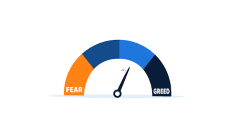
Crypto Fear & Greed Index Hits 74: Rally Sparks Correction Fears
The Crypto Fear & Greed Index jumped from 27 on August 12, 2026 to 74 on August 26, 2026, a 47-point swing in two weeks.
Christopher Smith |
Learn

What is MINT? What Are the Use Cases for Mint Blockchain?
Mint Blockchain is an Ethereum Layer 2 (L2) network designed to enhance the Non-Fungible Token (NFT) ecosystem.
Sherry Cantwell |

What is the Descending Triangle Pattern? What is the Ascending Triangle Pattern?
Ascending and descending triangles are the two most common right-angle chart patterns. Learn how to draw them correctly, confirm breakouts instead of guessing, project targets with the measured move, and control risk when the pattern fails.
James Dean |

What is Bitcoin Pizza Day? Who is Bitcoin Pizza Guy?
Bitcoin Pizza Day marks the first documented purchase of a physical item with bitcoin. Learn what happened on May 22, 2010, how much 10,000 BTC was worth then and later, and who the Bitcoin Pizza Guy really is.
Craig Green |