
$ 115.350(0.00%)
KAU Price Chart
Kinesis Gold Market Information
$ 206.980
0.00%
0.00%
0.00%
119
2,012.57
$ 313,532,471.69
2,718,096.85
Information
Issue Date
Initial Offering Price--
Max Supply
0.00
Circulating Supply2,718,096.85
Listed Exchanges0
Incentive Mechanism
Encryption Algorithm--
Kinesis Gold Price History
| Time | Change | High | Low |
|---|---|---|---|
| 24H | 0.00% | -- | -- |
| 7D | 0.00% | -- | -- |
| 30D | 0.00% | -- | -- |
| All | 0.00% | -- | -- |
About Kinesis Gold
Kinesis Gold (KAU) is a gold-backed digital currency developed by Kinesis, a global platform that combines the traditional value of precious metals with the efficiency and accessibility of blockchain technology. Unlike conventional cryptocurrencies, which may experience significant price volatility, KAU is designed to represent ownership of physical gold, offering users a digital alternative to traditional gold investment.
How Does Kinesis Gold (KAU) Work?
Each KAU represents one gram of fully allocated physical gold with a minimum purity of 99.99%. The underlying gold is securely stored in professional vaulting facilities across multiple international locations. According to Kinesis, the gold reserves undergo independent third-party audits twice a year to verify that the digital currency remains backed by physical bullion at a 1:1 ratio.
KAU holders retain legal ownership of their allocated gold and can redeem their digital holdings for physical bullion, subject to minimum redemption requirements and applicable fees. This structure distinguishes KAU from traditional gold exchange-traded funds (ETFs) and synthetic gold investment products.
Key Features of Kinesis Gold (KAU)
One of KAU's primary advantages is its combination of physical gold ownership and digital transferability. Users can buy, sell, hold, and transfer gold digitally without directly handling or storing physical bullion.
Another distinctive feature is the Kinesis yield system. Eligible KAU holders may receive periodic rewards funded by a portion of transaction fees generated within the Kinesis ecosystem. Unlike conventional interest-bearing investments, these rewards depend on platform activity and are not guaranteed.
Kinesis also states that it does not charge ongoing storage fees for the physical gold backing KAU, although transaction, withdrawal, and redemption fees may apply.
KAU Use Cases and Investment Considerations
KAU can serve several purposes, including gold investment, portfolio diversification, value transfer, and exposure to precious metals through digital assets. Its gold-backed structure may appeal to investors seeking an alternative to cryptocurrencies whose prices are primarily driven by market speculation.
However, KAU is not risk-free. Its market value fluctuates with global gold prices, while liquidity, custody arrangements, redemption conditions, regulatory developments, and platform-related risks may affect users.
Overall, Kinesis Gold (KAU) represents an approach to tokenizing real-world assets by connecting physical gold ownership with digital financial infrastructure. It offers investors a way to access gold through a transferable digital currency while maintaining a direct relationship with the underlying precious metal.
Kinesis Gold News

Anthropic IPO Shows Crypto Perps Lead, Tokenized Access Lags
Anthropic's record IPO on November 18–19, 2026, drew $1.888 billion in 24-hour crypto perpetual futures volume on Hyperliquid on listing day, weeks after those contracts began trading.
Cornell Rachel |

How Much of the $6B Binance Hack Is Frozen? DOJ Says $2.7B
The U.S. Department of Justice said on November 12, 2026, that more than $2.7 billion of the more than $6 billion stolen from Binance on October 29, 2026, has been frozen. The department has court authorization to seize or restrain more than $1.2 billion of that amount.
Jerry McNeill |

Strategy and Metaplanet Set for MSCI Index Exit Under New Rule
MSCI said on November 11, 2026, that it will remove Strategy from the MSCI USA Index and Metaplanet from the MSCI Japan Small Cap Index at the close of business on November 30, 2026 (MSCI).
Sherry Cantwell |
Learn
What is Liquid Staking? What is the Difference Between Liquid Staking and Staking?
What is Liquid Staking? Liquid staking, also known as soft staking, is a more advanced form of traditional staking that is available on many new-generation smart contract protocols. Let's take a closer look.
James Dean |
How to Swap BNB to AVAX and How to Swap AVAX for Time
Learn how to swap BNB to AVAX and AVAX to TIME without using the wrong chain. Compare exchange and bridge routes, verify the TIME contract, and confirm each transaction.
Hallie Gill |
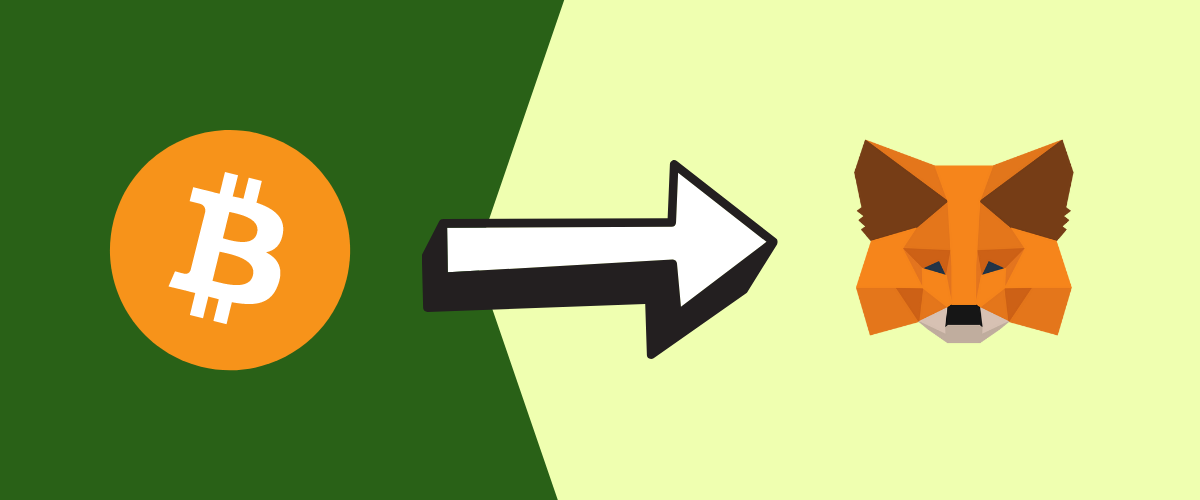
How Can You Add BTC to MetaMask?
MetaMask does not hold native Bitcoin by default. Learn how to add WBTC or other wrapped BTC, avoid network mistakes, and understand the risks.
James Dean |