
$ 0.00005131(0.00%)
LYNX Price Chart
Lynx Market Information
$ 0.001212
0.00%
0.00%
0.00%
4330
6,475.11
--
0.00
Information
Issue Date
Initial Offering Price--
Max Supply
0.00
Circulating Supply0.00
Listed Exchanges0
Incentive Mechanism
Encryption Algorithm--
Lynx Price History
| Time | Change | High | Low |
|---|---|---|---|
| 24H | 0.00% | -- | -- |
| 7D | 0.00% | -- | -- |
| 30D | 0.00% | -- | -- |
| All | 0.00% | -- | -- |
About Lynx
Lynx was launched on 24 December 2017 by a team based in Charlotte, N.C., and aims to create a stable, eco-friendly platform for application developers to use for storing and verifying critical data. The open-source Lynx blockchain is used by the for-profit company, Logware, to store data where immutable transparency is a key factor (i.e IoT sensors, transaction receipts, data loss prevention) for both encrypted and plaintext application use cases.
At Lynx (which started as a downstream clone of Litecoin), the team believes that for blockchain to be considered a secure platform in today’s marketplace, it must be created with global sustainability in mind. As such, its business rules discourage high-volume mining hardware because the code purposefully lacks incentives to mine it for profit. In addition, the entire Lynx network is designed to operate on a collaboration of low power devices (like Raspberry Pis) that everyday, non-technical users can run, resulting in a collective global mining cost of only dollars a day. This includes mining the coin and confirming transactions.
To accomplish this, the lead technical designer created ‘Hybrid Proof of Work’ to solve four primary problems related to standard Proof of Work (PoW). First, PoW encourages competitive, profit-driven mining. Second, competitive, profit-driven mining demands the use of expensive, high-powered computer processing to secure the network. Third, expensive, high-powered processing power is a barrier to entry for individuals who want to participate by mining the coin. This creates a hierarchical and inequitable system based on who can afford high-powered mining hardware and the electrical costs associated with them, and as a result, few miners control the entire network. Fourth, mining farms are filled with mining hardware that consume an ever-growing amount of electricity.
Hybrid Proof of Work reportedly brings stability to Lynx and maintains network integrity because of:
The low cost to maintain mining hardware in the global Lynx network.
The low work output of discrete mining hardware in the global Lynx network.
The lilliputian impact to the global Lynx network upon acute mining hardware failure.
Additional technical information can be found in the latest version of the white paper (co-written by Ben Wilson and Dr. A. Carreiro, published on March 17, 2019.) It includes information about the basic coin parameters, the HPoW phases of activation, and the block validation process. The white paper also includes information for non-technical users.
Lynx News

Bitcoin Tops $81K, NEAR Jumps 23% Amid ZEC Swap Traffic
Bitcoin climbed past $81,000 during Monday's Asian trading session, while NEAR surged 23% on a wave of swap activity tied to Zcash.
Wayne Ingram |

Ethereum Lets Users Pay Gas Fees Without Holding ETH
Ethereum core developers scheduled EIP-8141, called "Frame Transactions," for inclusion in the Hegotá upgrade planned for 2027.
James Dean |
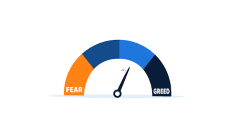
Crypto Fear & Greed Index Hits 74: Rally Sparks Correction Fears
The Crypto Fear & Greed Index jumped from 27 on August 12, 2026 to 74 on August 26, 2026, a 47-point swing in two weeks.
Christopher Smith |
Learn

What is the Descending Triangle Pattern? What is the Ascending Triangle Pattern?
Ascending and descending triangles are the two most common right-angle chart patterns. Learn how to draw them correctly, confirm breakouts instead of guessing, project targets with the measured move, and control risk when the pattern fails.
James Dean |

What is Bitcoin Pizza Day? Who is Bitcoin Pizza Guy?
Bitcoin Pizza Day marks the first documented purchase of a physical item with bitcoin. Learn what happened on May 22, 2010, how much 10,000 BTC was worth then and later, and who the Bitcoin Pizza Guy really is.
Craig Green |

What is Polymarket? Can It Predict the Future of Crypto?
Polymarket is a decentralized prediction market on Polygon where users trade Yes/No shares on real-world events. Here is how it works, how accurate its prices are, its crypto limits, and its legal status.
Barry Stidham |