
$ 0.0378(0.00%)
PNT Price Chart
pNetwork Market Information
$ 3.3700
0.00%
0.00%
0.00%
966
59,362,264.85
$ 3,330,776.35
87,969,765.38
Information
Issue Date2018-04-24
Initial Offering Price--
Max Supply
87,984,177.00
Circulating Supply87,969,765.38
Listed Exchanges0
Incentive Mechanism
Encryption Algorithm--
pNetwork Price History
| Time | Change | High | Low |
|---|---|---|---|
| 24H | 0.00% | -- | -- |
| 7D | 0.00% | -- | -- |
| 30D | 0.00% | -- | -- |
| All | 0.00% | -- | -- |
About pNetwork
pNetwork is an open-source multi-chain routing protocol for providing interoperability across a variety of independent blockchains. These cross-blockchain functionalities enable, for example, the release of "wrapped" tokens called pTokens that rely on maintaining a 1-to-1 peg in-between the native blockchain and the host blockchain (e.g. Bitcoins wrapped to operate on the Ethereum blockchain). The pNetwork Token PNT serves as the governance token for the pNetwork DAO, the staking currency for pNetwork nodes and the reward currency for the services offered by these nodes.
The pNetwork project was launched in late 2019 (it was originally called pTokens) as a cross-chain solution connecting multiple blockchains and assets, with its first cross-chain bridging solution connecting Bitcoin and Ethereum going live in production on March 5th, 2020. This was followed by the launch of a variety of other cross-chain connections to enable the movement of assets and, later on, NFTs and data across ecosystems. Today, pNetwork powers connections across over 15 networks (including multiple very different blockchain environments and Ethereum scaling networks). In parallel, the protocol experienced subsequent evolutions with the goal of making the system increasingly decentralized.
With the release of the pNetwork V2, pTokens become fungible across chains, meaning users will be able to move their pTokens directly across any of the supported chains without the need to go back to the native blockchain.
Moreover, not only assets can be moved cross-chain, but also NFTs and cross-chain transfers and smart contract interactions. The protocol has already processed transactions for more than 1billion of value.
pNetwork News

Bitcoin Sinks Below $83K as Treasury Yields Near 2002 High
Bitcoin fell 1.6% to just under $82,800 on the morning of October 8, 2026 in Asia, breaking below a level analysts had flagged as a potential trigger for further declines.
James Dean |

Bitcoin Tops $81K, NEAR Jumps 23% Amid ZEC Swap Traffic
Bitcoin climbed past $81,000 during Monday's Asian trading session, while NEAR surged 23% on a wave of swap activity tied to Zcash.
Wayne Ingram |

Ethereum Lets Users Pay Gas Fees Without Holding ETH
Ethereum core developers scheduled EIP-8141, called "Frame Transactions," for inclusion in the Hegotá upgrade planned for 2027.
James Dean |
Learn
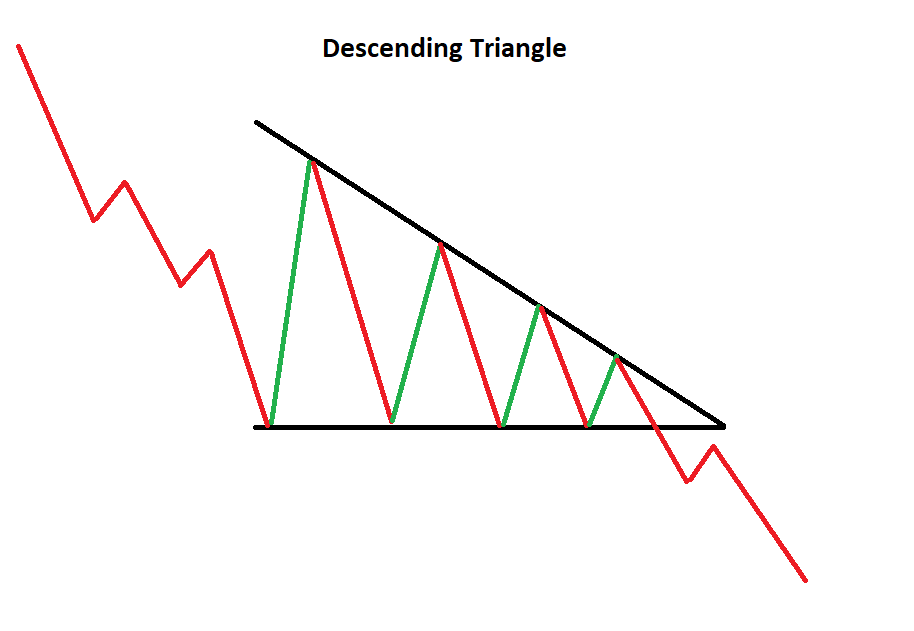
What is the Descending Triangle Pattern? What is the Ascending Triangle Pattern?
Ascending and descending triangles are the two most common right-angle chart patterns. Learn how to draw them correctly, confirm breakouts instead of guessing, project targets with the measured move, and control risk when the pattern fails.
James Dean |

What is Bitcoin Pizza Day? Who is Bitcoin Pizza Guy?
Bitcoin Pizza Day marks the first documented purchase of a physical item with bitcoin. Learn what happened on May 22, 2010, how much 10,000 BTC was worth then and later, and who the Bitcoin Pizza Guy really is.
Craig Green |

What is Polymarket? Can It Predict the Future of Crypto?
Polymarket is a decentralized prediction market on Polygon where users trade Yes/No shares on real-world events. Here is how it works, how accurate its prices are, its crypto limits, and its legal status.
Barry Stidham |