
$ 0.000229(0.00%)
RUFF Price Chart
Ruff Market Information
--
0.00%
0.00%
0.00%
1510
171,939,465.30
$ 215,656.65
940,500,000.00
Information
Issue Date2018-01-29
Initial Offering Price$ 0.0600
Max Supply
0.00
Circulating Supply940,500,000.00
Listed Exchanges0
Incentive MechanismDPoS
Encryption Algorithm--
Ruff Price History
| Time | Change | High | Low |
|---|---|---|---|
| 24H | 0.00% | -- | -- |
| 7D | 0.00% | -- | -- |
| 30D | 0.00% | -- | -- |
| All | 0.00% | -- | -- |
About Ruff
1. Introduction
Ruff Chain combines IoT technology with blockchain. It contains a distributed operating system and an open main chain that connects peer-to-peer networks and consensus mechanisms from virtual worlds to reality. Traditional blockchains give up availability over consistency and partition tolerance, but Ruff achieves availability through the combination of edge computing and blockchain to meet elastic real-time needs.
The project goal is to solve the problem of trusted operation and heavy operation between IoT systems in different fields, thereby creating an open Ruff Chain ecosystem.
2. Project introduction
The core problem to be solved by Ruff Chain is the trusted interoperability and paid interoperability between IoT devices of different systems. In the future, Ruff Chain will be a new underlying architecture platform based on the Internet of Things, featuring decentralization, development, open source and high efficiency. In the ecosystem, different participants can obtain token returns by providing resources, or consume tokens to obtain resources, and share them with each other to form an economically driven autonomous body.
The core problem to be solved by RuffChain is the trusted interoperability and paid interoperability between IoT devices of different systems. It has the following characteristics:
Time series data: RuffChain's edge computing nodes It will take the synchronized timestamp as the core to control the business logic in the local area network;
Consensus mechanism: Considering the computing power of the master device in the Internet of Things, RuffChain chooses DPoS as the consensus algorithm;
Off-chain control: RuffChain uses command signature technology to achieve off-chain control, including device initialization, device binding, control command verification, and historical command on-chain; evaluation mechanism.
The core problem to be solved by Ruff Chain is the trusted interoperability and paid interoperability between IoT devices of different systems. In the future, Ruff Chain will be a new underlying architecture platform based on the Internet of Things, featuring decentralization, development, open source and high efficiency. In the ecosystem, different participants can obtain token returns by providing resources, or consume tokens to obtain resources, and share them with each other to form an economically driven autonomous body.
RuffChain, as an architecture combining the Internet of Things and blockchain, includes a distributed operating system and an open main chain, thereby extending the peer-to-peer network and consensus mechanism of the virtual world to offline, The realization of information flow promotes atomic flow.
Simply put, blockchain-based distributed ledgers can provide trust, ownership records, transparency, and communication support for IoT applications on the Ruff platform. Secondly, Ruff will also develop a private chain on the basis of the public chain in the future to store transaction information in an extremely secure manner. Using a centralized server mobile phone and an IoT architecture that stores data, information can be written into local ledgers and synchronized with other local ledgers to ensure the security and uniqueness of facts.
All IoT transactions by Ruff on the blockchain will be time stamped to ensure availability for future generations. At the same time, the digital agreement of the blockchain, or smart contract, can be applied to the blockchain data to implement commercial terms in IoT communications to ensure the effectiveness and security of the IoT in large-scale applications. Finally, the blockchain with high-end encryption technology can solve the Ruff Internet of Things public chain when it is used, reaching the highest level of security standards.
Ruff has his own approach to the large-scale use and standardization of the Internet of Things. Ruff OS, an IoT operating system that abstracts the hardware and calls the program library to operate the hardware. It uses JavaScript, which is widely used by developers, as the programming language, so that the same application code can also run on different boards. Say goodbye to cross-compilation and programming of boards. You can complete the test on the PC and deploy IoT applications with one click. Let the fragmentation and standardization of the Internet of Things be solved at the application layer, and the problem of high technical threshold will no longer exist.
Ruff News

Bitcoin Tops $81K, NEAR Jumps 23% Amid ZEC Swap Traffic
Bitcoin climbed past $81,000 during Monday's Asian trading session, while NEAR surged 23% on a wave of swap activity tied to Zcash.
Wayne Ingram |

Ethereum Lets Users Pay Gas Fees Without Holding ETH
Ethereum core developers scheduled EIP-8141, called "Frame Transactions," for inclusion in the Hegotá upgrade planned for 2027.
James Dean |
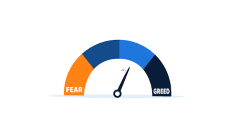
Crypto Fear & Greed Index Hits 74: Rally Sparks Correction Fears
The Crypto Fear & Greed Index jumped from 27 on August 12, 2026 to 74 on August 26, 2026, a 47-point swing in two weeks.
Christopher Smith |
Learn

What is the Descending Triangle Pattern? What is the Ascending Triangle Pattern?
Ascending and descending triangles are the two most common right-angle chart patterns. Learn how to draw them correctly, confirm breakouts instead of guessing, project targets with the measured move, and control risk when the pattern fails.
James Dean |

What is Bitcoin Pizza Day? Who is Bitcoin Pizza Guy?
Bitcoin Pizza Day marks the first documented purchase of a physical item with bitcoin. Learn what happened on May 22, 2010, how much 10,000 BTC was worth then and later, and who the Bitcoin Pizza Guy really is.
Craig Green |

What is Polymarket? Can It Predict the Future of Crypto?
Polymarket is a decentralized prediction market on Polygon where users trade Yes/No shares on real-world events. Here is how it works, how accurate its prices are, its crypto limits, and its legal status.
Barry Stidham |