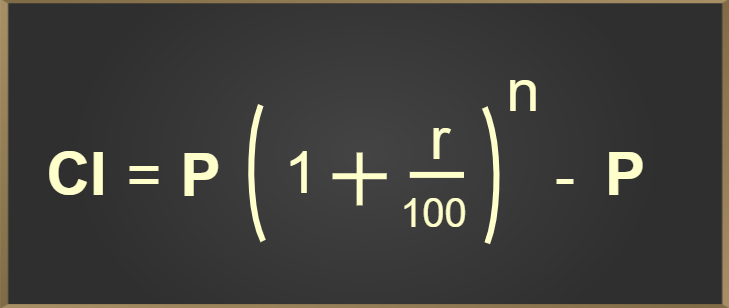
This article is about what is the compound annual growth rate. If you are an investor, you may have come across the term CAGR, which stands for the Compound Annual Growth Rate.
What is the Compound Annual Growth Rate?
CAGR is the measure of an investment’s annual growth rate over time, with the effect of compounding taken into account. It is often used to measure and compare the past performance of investments or to project their expected future returns.
One of the advantages of CAGR is that it smooths out the fluctuations in returns that may occur from year to year. For instance, if your portfolio had returns of 20%, -10%, 15%, 5%, and 10% in each of the five years, the average annual return would be 8%, but this does not account for the effect of compounding. The CAGR, on the other hand, reflects the true growth rate of your portfolio over the entire period.
However, CAGR also has some limitations that you should be aware of. First, CAGR does not reflect the risk or volatility of an investment. A higher CAGR does not necessarily mean a better investment, as it may involve taking more risk or experiencing more fluctuations in returns. Second, CAGR assumes that all profits are reinvested at the end of each year, which may not be realistic for some investors who may need to withdraw or spend some of their earnings. Third, CAGR may not be accurate for investments that have negative returns or zero values at some point during the period.
What is the Formula to Calculate?
CAGR is calculated by dividing the ending value of an investment by its beginning value, raising the result to the power of one divided by the number of years, and subtracting one from the final result. The formula can be written as:
CAGR = (Ending Value / Beginning Value)^(1 / Number of Years) - 1
For example, suppose you invested $10.000 in a portfolio that grew to $15.000 in five years. The CAGR of this investment would be:
CAGR = ($15.000 / $10.000)^(1 / 5) - 1
CAGR = 0.0841 or 8.41%
This means that your portfolio grew at an average annual rate of 8.41% over the five-year period.
Another advantage of CAGR is that it allows you to compare different investments with different time horizons and different patterns of returns. For example, if you had another portfolio that grew from $12.000 to $18.000 in four years, you could use CAGR to see which portfolio performed better.
The CAGR of the second portfolio would be:
CAGR = ($18.000 / $12.000)^(1 / 4) - 1
CAGR = 0.1069 or 10.69%
This means that the second portfolio grew at a higher annual rate than the first portfolio, despite having a shorter time horizon and a lower ending value.
Bottom Line
In this article, we have discussed what is the compound annual growth rate. CAGR is a useful tool for evaluating and comparing the performance of investments over time, but it should not be used in isolation or without considering other factors such as risk, volatility, and cash flows.