
$ 0.000103(0.00%)
PST Price Chart
Primas Market Information
--
0.00%
0.00%
0.00%
1776
3,087.14
$ 5,273.59
51,199,999.00
Information
Issue Date2017-08-29
Initial Offering Price$ 0.2100
Max Supply
0.00
Circulating Supply51,199,999.00
Listed Exchanges0
Incentive Mechanism
Encryption Algorithm--
Primas Price History
| Time | Change | High | Low |
|---|---|---|---|
| 24H | 0.00% | -- | -- |
| 7D | 0.00% | -- | -- |
| 30D | 0.00% | -- | -- |
| All | 0.00% | -- | -- |
About Primas
1. Introduction
Primas is a decentralized project dedicated to using blockchain technology to solve a series of problems brought by the Internet economy, such as fake news, plagiarism, copywriting, headline party, Low-quality content, etc. Primas's original Distributed Trusted Content Protocol (DTCP) will bring credible and high-quality information back to the Internet and reshape the Internet content value ecosystem. PST is an intelligent asset running in the Primas system, and it is the tokenized performance of value content. In Primas's DAPP, PST can be earned through the generation and dissemination of original content. In some scenarios, PST will be consumed or mortgaged in order to obtain more high-quality content. The entire economic incentive system will ensure the wide circulation and total balance of PST.
2. Project introduction
Primas is a high-quality content platform based on DTCP (Distributed Trusted Content Protocol). Primas uses blockchain technology to ensure the credibility of content, uses an economic incentive system to accelerate the production and circulation of high-quality content, and allows readers to see personalized high-quality content through social recommendation. Traditional Internet applications can also use the API to access Primas to quickly obtain the powerful functions provided by Primas.
Primas is an open content publishing, recommendation and trading ecosystem. Primas is committed to using blockchain and other technical means to change the existing content market structure and solve the problem that high-quality content is difficult to identify, disseminate and monetize. Through the decentralized content traceability and screening mechanism, users can obtain high-quality content. The new content value evaluation system ensures that the producers of high-quality content can directly benefit. Provide copyright protection for original creators through the immutability of the blockchain. Decentralized data management will also better protect user privacy.
Primas generates a globally unique digital fingerprint (Primas DNA) for each original work. Primas DNA contains metadata i such as author, release time, and content fingerprint. When we see a message, we can know who created the information and when, and who made what changes and when. , the new metadata will make the information itself more valuable, and even affect our judgment on the quality of the information.
Application scenarios
Primas DNA
Primas will generate globally unique digital fingerprint information (Primas DNA) for each original work. Primas DNA contains metadata i such as author, release time, and content fingerprint. When we see a message, we can know who created the information and when, and who made what changes and when. , the new metadata will make the information itself more valuable, and even affect our judgment on the quality of the information.
Primas DNA, Smart Contracts, and Blockchain-Based Proof of Existence
Primas DNA ensures content can be traced back to source even if partially tampered; Automated authorization; Proof of existence based on blockchain technology also greatly reduces the cost of forensics.
Primas Content Value Evaluation System and Incentive Mechanism
Primas establishes a content value evaluation system that does not depend on traffic to measure the quality of content, and rewards authors of high-quality content with Primas Token Ways to improve the quality of content for the entire community.
User autonomy
On the Primas platform, users can choose the communities they are interested in. All communities are user-autonomous to ensure that they will not be affected by any centralized algorithm. manipulated. All other algorithms related to content display are open source and transparent, and users can also participate in the optimization of the algorithm.
Blockchain technology fully protects data privacy
In the Primas network, all information that must be disclosed, such as author and transaction information, is open and transparent, and relevant information is recorded in the blockchain middle. Information related to user browsing history and privacy will not be recorded and uploaded.
Primas News

Bitcoin Sinks Below $83K as Treasury Yields Near 2002 High
Bitcoin fell 1.6% to just under $82,800 on the morning of October 8, 2026 in Asia, breaking below a level analysts had flagged as a potential trigger for further declines.
James Dean |

Bitcoin Tops $81K, NEAR Jumps 23% Amid ZEC Swap Traffic
Bitcoin climbed past $81,000 during Monday's Asian trading session, while NEAR surged 23% on a wave of swap activity tied to Zcash.
Wayne Ingram |

Ethereum Lets Users Pay Gas Fees Without Holding ETH
Ethereum core developers scheduled EIP-8141, called "Frame Transactions," for inclusion in the Hegotá upgrade planned for 2027.
James Dean |
Learn
What is pSTAKE Finance? How Does It Unlock Liquidity for Stakers?
pSTAKE Finance is a DeFi protocol designed to address a key challenge in the Proof-of-Stake (PoS) blockchain world: the lack of liquidity for staked assets.
Jerry McNeill |
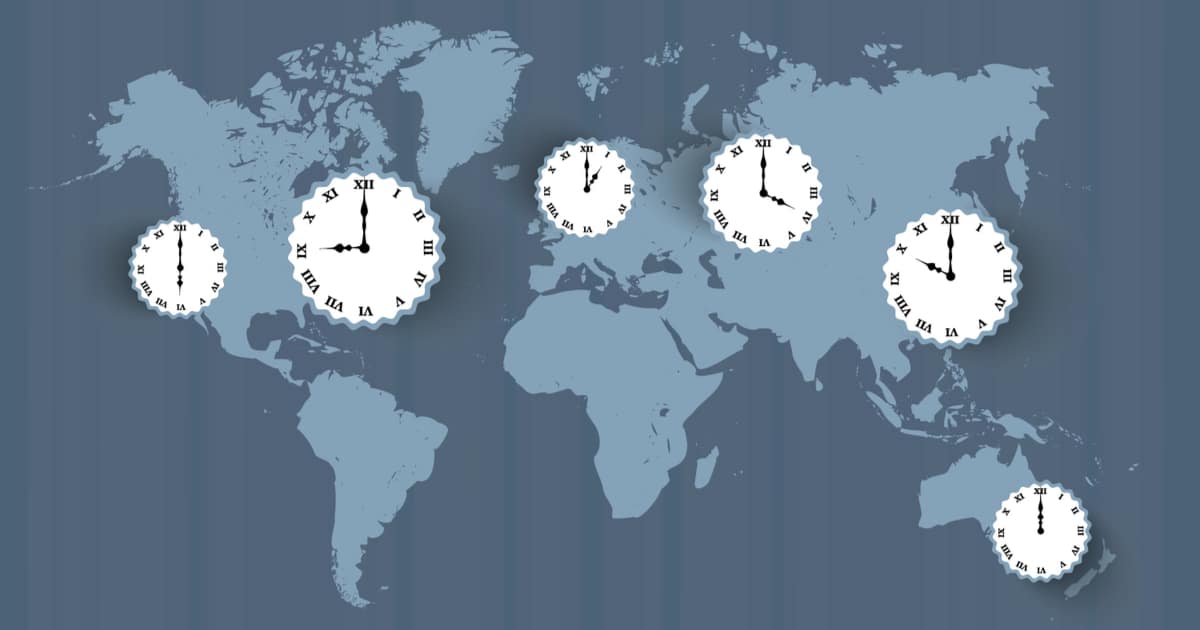
What Time Does the Stock Market Close on PST? — Stock market holidays in 2023
Here is about what time does the stock market close on PST. You always have to take care of the time zone you are investing in.
Craig Green |
How Does the PST Time Zone Affect Cryptocurrency Trading? Is It the Best Time Zone to Trade Crypto?
The cryptocurrency market is a global one, with traders from all over the world participating. However, the time zone in which you live can have an impact on your trading experience. This is because the cryptocurrency market is open 24/7, but the volume of trading varies depending on the time of day and the location of the traders.
Sherry Cantwell |