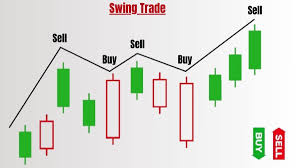
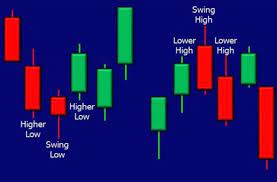
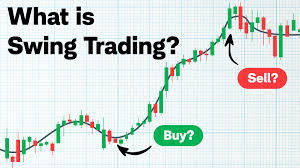
Swing trading sits in the middle of the continuum between day trading to trend trading. Let's explore more about it in this article, "Learn How To Swing Trade During Bear And Bullet Markets Conditions."
Fundamental trading that involves holding positions for more than a day has been referred to as swing trading. Traders use technical analysis to enter positions, hold them for a few days or weeks, and then quickly leave them in an effort to make short-term gains.
Since changes in corporate fundamentals typically take only a little period of time to create significant price movement to render a respectable profit, the majority of fundamentalists are swing traders. Swing trading is a type of trading that falls in between day trading and trend trading.
Swing Trading in a Bear Market
Swing trading in bear markets is one of the trickier types of buy-and-sell strategies. Long-term equity market prices are falling when there is a downtrend. Therefore, purchasing a security with the intention of holding it and hoping for a price increase is not advantageous. There are numerous ways to get around this:
Reduce your trade period. Be prepared for a speedier turnaround on the securities you are holding rather than holding for several weeks.
Hold more cash. In the event that the prices of the securities you own decrease significantly, prepare to hold back part of the capital you could otherwise be trading.
Convert to options (by buying puts). If you think prices are going down, the best position to hold is to sell a security first, then buy it back later. This is preferred to buying now and selling later.
Swing Trading in a Bull Market
Trading in bull markets could be simpler than in bear ones. As prices tend to appreciate during these market conditions, it's easier to buy a security and experience a profit a short while later. However, there are a few things to keep in mind when swing trading during bullet markets:
Entry points are higher. Chances are higher that general market assets are now more expensive if broad markets have increased after you sell your position and take your profits. Be ready to purchase securities at higher costs.
Bad habits are formed. Bull markets are said to be when harmful trading habits are created. Even though it might seem like every security is a winner, this won't always be the case. Continue to conduct due diligence and market research to identify the best securities to hold.
Consider leverage. Consider your risk tolerance before leveraging; leverage trading is not for everyone. However, if you are confident in the markets' ongoing appreciation, you might be able to leverage your position to increase it.
In-Between Market Conditions
Financial markets that are moving sideways offer the ideal swing trading circumstances. The best swing trading opportunities frequently arise when the market is changing from a bear market to a bull market or when the market is experiencing significant uncertainty. A few things to are: think about
Volatility is beneficial. The most profitable swing trades can be made when markets are erratic in both directions. Trading is frequently more challenging when volatility is purely directional (such in bull or bear markets).
Conditions are safest. Swing trades don't always succeed. If you're forced to hold securities, there's a good probability that neutral market conditions will cut down on your losses. There is frequently a higher possibility of price recovery under heavy decline conditions of being stuck with securities.
The Bottom Line
In fact, swing trading is one of the best trading strategies for new traders to try out. It still has a large profit potential for experienced and intermediate traders. Swing traders' long and short positions of many days are of a duration that does not cause distraction, but they do receive enough feedback on their trades after a couple of days to keep them motivated.
Hopefully, reading this article, "Learn How To Swing Trade During Bear And Bullet Markets Conditions", can help you to understand it better.