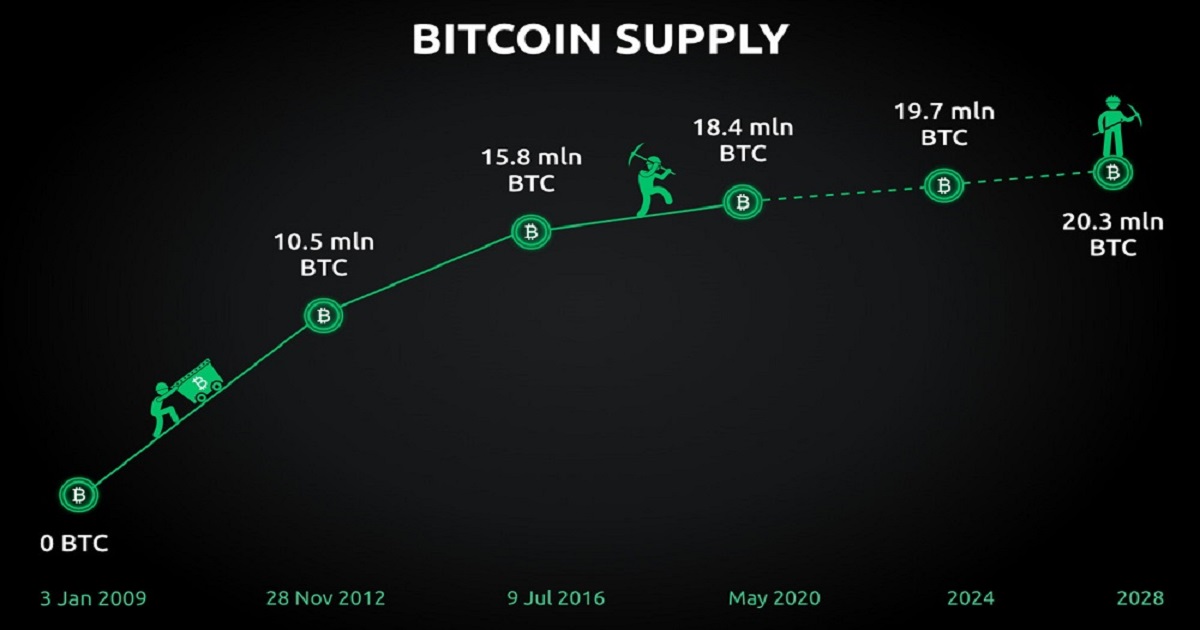
Bitcoin halving occurs every 210,000 blocks which translate to approximately every 4 years. This article will discuss, "What Is a Bitcoin Halving? What Happens When There Are No More Bitcoins Left?" Let's get started.
What Is a Bitcoin Halving?
Bitcoin halving decreases the number of new Bitcoins that are generated per block which lowers the supply of new Bitcoins, thus making the purchase price of the coin more expensive.
According to the general rules of economics, decreasing supply and constant demand should lead to higher prices. Halving usually precedes some of Bitcoin's largest runs as it reduces the supply of new Bitcoins while the demand remains steady.
What Happens When There Are No More Bitcoins Left?
The last 21 million bitcoins to ever be mined will have been mined by the year 2140. At this point, the halving schedule will cease because there will be no more new bitcoins to be found. The value of transaction fees paid to miners is anticipated to increase in the future due to a higher volume of transactions with fees attached and a higher nominal market value for bitcoins. Despite this, miners will still be motivated to keep validating and confirming new transactions on the blockchain.
What Is a Bitcoin Halving? What Happens When There Are No More Bitcoins Left? - Hopefully, this article can help you to get some knowledge.